
Some inaccuracies, including outdated references and unintentional errors, might appear in this article. The claims regarding potential energy savings, technical performance, or device effectiveness are merely illustrative and should not be taken as guarantees of specific outcomes. Seize this exclusive offer: buy StopWatt now and slash your power costs without needing solar panels, rewiring, or costly investments. Professional-grade power factor correction systems are the better choice for industrial or large-scale commercial applications. Indeed, StopWatt asserts that it boosts electronic safety and performance by delivering voltage fluctuation protection and functioning as a surge suppressor.
That’s why many people online believe StopWatt is simply another rebranded version of the same old product. You can find nearly identical devices on wholesale marketplaces under names like “electricity saving box.” Same design, same glowing green light, same claims. In plain English, the technology being advertised doesn’t match the promises being made.
The product leverages what it calls Electricity Stabilizing Technology (E.S.T.), which it claims regulates voltage flow, minimizes energy waste, and purifies dirty electricity. Plug in StopWatt today and begin saving immediately—backed by a 60-day risk-free guarantee. Today’s market isn’t just seeking energy-saving tools; it demands devices that effortlessly integrate into modern, tech-forward homes without adding clutter or complexity.
Online forums and third-party retailers have featured numerous user accounts detailing reduced power bills, improved appliance functionality, and greater peace of mind from using StopWatt. Some users report slight reductions in electricity costs and claim noticeable declines in device stop watt power saver overheating and voltage fluctuations. Essentially, StopWatt relies on fundamental electrical principles, including surge protection, voltage regulation, and basic power factor correction. Skeptical reviews and reports have labeled StopWatt as a gimmick or outright scam. Still, the term “dirty electricity filter” remains popular among consumers, particularly those interested in eco-friendly smart home solutions. Conversely, engineers and watchdog organizations highlight the lack of peer-reviewed evidence proving that dirty electricity filters significantly reduce household energy consumption.
**Is StopWatt effective in cutting electricity costs?**
The inexpensive components inside StopWatt fail to deliver the promised electricity bill reductions, as exaggerated in its misleading marketing. The StopWatt website features entirely fabricated reviews and testimonials, complete with stock images of fake customers. In truth, the product fails to deliver any of the advertised benefits in any meaningful capacity.
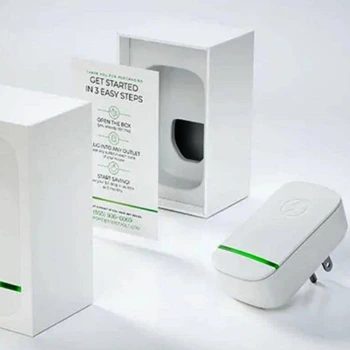
Recognizing Fake Energy Saving Devices
Each device promises to slash electricity bills by 30% to 90%. Full responsibility for product performance, safety, or compliance lies with the manufacturer and/or retailer. Consumers are advised to verify all product claims with the official manufacturer and review terms—such as pricing, returns, and warranties—directly from the original sales platform.
Dirty electricity—ranging from flickering lights to overheating devices and increased energy drain—can silently damage equipment and strain budgets. Unfortunately, traditional fixes like solar panels, new appliances, or home renovations often demand large upfront investments, making them unaffordable for many. StopWatt is aggressively marketed as the leading energy-saving device, promising lower monthly bills, dirty electricity filtration, and optimized household energy flow. While effective, traditional solutions like energy-efficient appliances or solar panels require significant investment. As our home’s power demands grew, the unit struggled to keep up, leaving the housing warmer than desired for a device left plugged in continuously. Larger homes or heavier appliance loads will likely require more than one StopWatt unit.
Though power factor correction is scientifically sound, its residential application via plug-in devices like StopWatt remains highly debated. Utility companies typically charge residential customers based on kilowatt-hours (kWh) consumed, not the power factor itself. For residential use, the advantages of power factor correction are often negligible. StopWatt is a compact, plug-in energy-saving device designed to enhance electrical system efficiency in homes and small offices. Many homeowners are unaware that poor power quality can silently drain their finances.
Purchase options and add-ons
Since residential billing differs from industrial practices, comparisons are inherently misleading. Trustworthy companies don’t rely on fake celebrity endorsements to sell their products. This tactic of falsely associating products with recognizable brands has been exploited for years by unscrupulous online sellers, leveraging consumer trust. Most advertisements remain vague because once consumers understand real household electricity dynamics, the claims quickly lose credibility.

Savings depend on the number of devices in standby mode, usage patterns, and how effectively the device moderates power draw without impacting performance of active devices. With wide voltage compatibility ranging from 90V to 250V, this device is designed for use in various residential electrical environments. It helps assist in managing voltage fluctuations and provides support for the protection of commonly used household appliances.
Electrical engineer Gregory Hansen has spent over a decade testing plug-in home devices and monitoring their performance on real residential circuits. You plugged in a small device promising cleaner electricity, only to see your power bill unchanged from last month. A compact wall-mounted gadget won’t magically halve your electricity bill. Those methods actually work because they achieve measurable reductions in energy usage. The same device appears across various low-cost online marketplaces under different brand names.
These Energy Saving Devices can potentially put your home and financial information at risk. The LED light and capacitor serve to disguise the worthless nature of the devices while demanding premium prices. The LED light is merely an illusion the device is actively “working” when plugged in. In essence – commodity parts that provide zero energy conservation function while deceiving buyers. If you receive anything at all, it’s a cheap plastic shell with a capacitor and an LED light. The product page is professionally designed and full of fake reviews, performance claims, and limited-time offers to pressure you into buying.
A link at the article’s end redirects readers to an e-commerce site selling the product. It falsely claims Elon Musk has introduced a new device enabling regular consumers to “counter” high energy bills. These pages are often boosted by aggressive SEO tactics, ensuring they rank high when users search for terms like “Elon Musk electricity device. These articles are cluttered with typos, broken links, and sensational headlines such as *”Elon Musk Crashes Utility Companies With Revolutionary Invention.”* To lend credibility, fake articles are published on sites mimicking reputable news outlets like CNN, Fox News, Bloomberg, and TechCrunch.